Art & Creativity in Early Childhood: Why It Matters More Than You Think
Ask most parents what “real learning” looks like, and art rarely tops the list. Reading, math, and language usually take priority, while drawing and crafts are seen as a fun way to pass the time. But early childhood experts consistently point to something surprising: art isn’t just play it’s one of the most powerful tools for brain development in the early years.
Art Builds the Brain, Not Just the Imagination
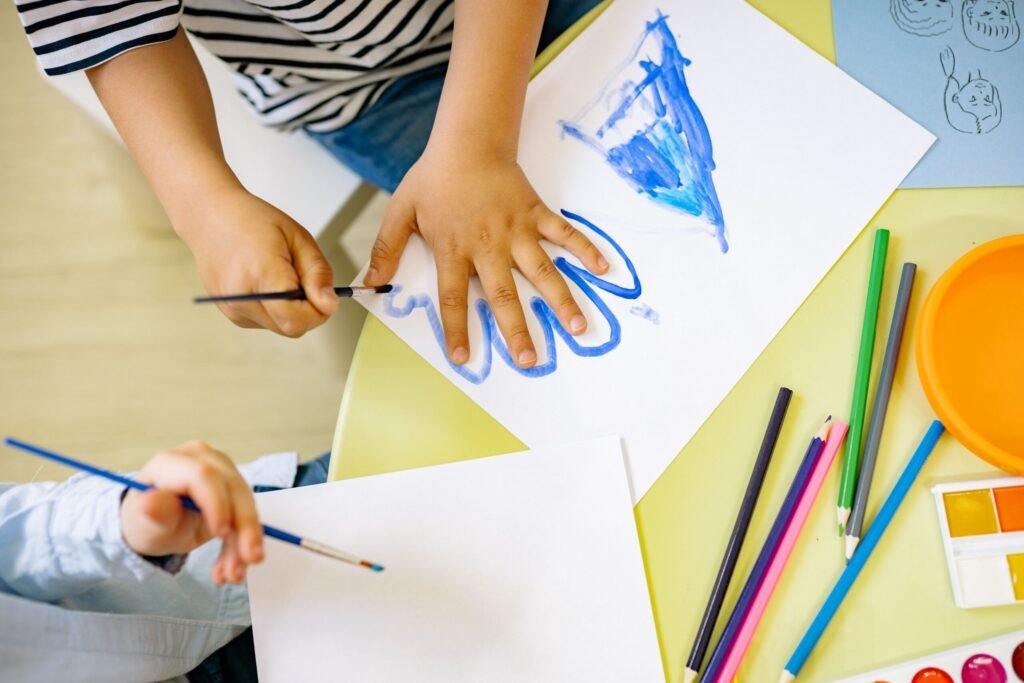
When a child draws, colors, or crafts, they’re doing far more than making something pretty. They’re strengthening fine motor skills by gripping a crayon or scissors. They’re developing hand-eye coordination by controlling where a line goes. They’re practicing decision-making what color to use, what shape to draw next. And they’re building focus and patience, often without even realizing it.
Creativity and Problem-Solving Go Hand in Hand
Every time a child figures out how to make a paper plate look like a lion’s face, or decides what to do when the glue doesn’t stick the way they wanted, they’re problem-solving in real time. There’s no single right answer in art — which means children learn to experiment, adjust, and try again. That same flexible thinking carries over into math, science, and everyday challenges later in life.
Art Gives Children a Voice Before They Have the Words
Young children often feel more than they can express in language. A messy scribble of red and black might represent something a child can’t yet put into words frustration, excitement, or a big idea they don’t have vocabulary for yet. Art becomes a safe outlet for emotional expression, long before full sentences are available.
It Builds Confidence Without Pressure
Unlike a math problem with one correct answer, art rarely has a “wrong.” A child’s drawing is automatically valid simply because they made it. This freedom builds genuine confidence — the kind that comes from creating something and being proud of it, not from getting a gold star for being “right.”
Simple Ways to Encourage Art at Home
- Keep supplies accessible. Crayons, paper, and safe scissors within reach invite spontaneous creativity rather than scheduled “art time.”
- Ask open questions, not instructions. Instead of “draw a house,” try “what does your dream house look like?”
- Celebrate the process, not just the result. Comment on the colors they chose or the story behind their drawing, rather than only praising how “good” it looks.
- Mix mediums. Crayons, clay, collage, paint, and simple craft activities each build slightly different skills.
- Display their work. A drawing taped to the fridge tells a child their creativity matters.
Art as a Foundation, Not a Distraction
Far from being a break from “real” learning, art quietly builds many of the same skills that reading and math rely on: focus, fine motor control, sequencing, and confident self-expression. Giving children regular, unstructured time to create isn’t just enriching their childhood — it’s laying groundwork that will support their learning for years to come.
If you’re looking for structured ways to bring more art into your child’s routine, activity books like MAK’s Art Ideas collection offer guided projects that keep creativity flowing while still building these essential early skills.